All Bible verses in this article are English Standard Version (ESV).
As Christians, we’re called to be good stewards of all that God has entrusted to us, including our financial resources. But what does this mean when it comes to investing? How do you demonstrate financial stewardship as a Christian investor?
In this blog post, we’ll explore the concept of responsible investment stewardship, its biblical foundations, and practical ways to implement it in your financial life.
What Is Investment Stewardship?
Investment stewardship is the responsible and ethical management of financial resources and investments. For Christians, it’s rooted in the understanding that God is the ultimate owner of all resources, and we are entrusted with managing them wisely and in accordance with His principles.
Investment stewardship includes:
- Making investment decisions that align with Christian values
- Considering the ethical and social impact of investments
- Managing resources to honor God and benefit others
What Is Biblical Financial Stewardship for Investors?
Biblical financial stewardship for investors goes beyond mere profit-seeking or risk management. It’s a holistic approach that integrates faith, ethics, and financial decision-making. As Christians, we’re called to view our resources through the lens of God’s ownership and our role as stewards. This perspective transforms how we approach investing, encouraging us to consider not just financial returns, but also the impact of our investments on others and their alignment with God’s purposes.
The Bible offers rich guidance on how to handle money and resources, providing a framework for faithful investing. While it doesn’t specifically address modern investment vehicles like stocks or mutual funds, it does provide timeless principles that can be applied to any form of wealth management. These principles challenge us to think beyond personal gain and consider how our financial decisions can honor God and serve others.
Biblical financial stewardship for investors is grounded in several key principles:
- Acknowledging God’s Ownership: Recognizing that all resources ultimately belong to God (Psalm 24:1).
- Wise Management: Using wisdom and discernment in financial decisions (Proverbs 21:5).
- Avoiding Greed: Not letting the pursuit of wealth become an idol (1 Timothy 6:10).
- Generosity: Using resources to bless others and support God’s work (2 Corinthians 9:6-7).
- Integrity: Making honest and ethical financial decisions (Proverbs 11:1).
Stewardship in the Stock Market
The stock market, with its complex dynamics and myriad of investment options, presents unique challenges and opportunities for Christian investors. As stewards of God’s resources, we’re called to navigate this landscape with wisdom, integrity, and a focus on Kingdom values. This doesn’t mean we can’t seek profitable investments, but rather that we should consider the broader impact of our investment choices beyond just financial returns.
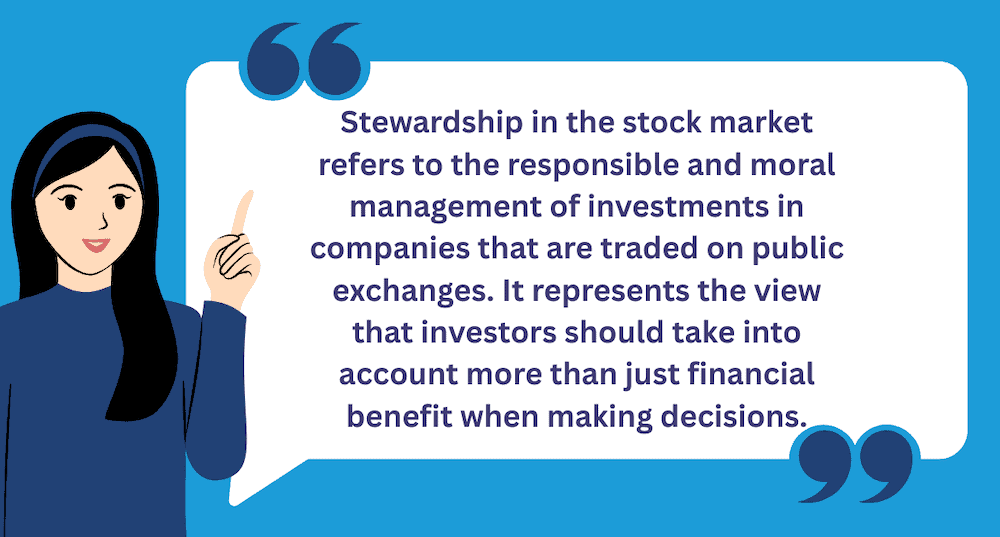
In the stock market, stewardship takes on specific forms:
- Ethical Company Selection: Investing in companies with strong ethical practices and avoiding those with questionable behaviors.
- Shareholder Engagement: Using your position as a shareholder to advocate for positive changes in company policies or practices.
- Long-Term Perspective: Focusing on sustainable, long-term growth rather than short-term gains.
- Transparency: Being open and honest about your investment decisions and their rationale.
How to Demonstrate Financial Stewardship as a Christian Investor
Demonstrating financial stewardship goes beyond just making ethical investment choices. It involves a holistic approach to managing your investments in a way that honors God and reflects your Christian values. Here’s how you can put this into practice:
- Educate Yourself: Learn about different investment options and how they align with Christian values. This might involve reading books on faith-based investing, attending seminars, or taking courses on financial stewardship.
- Define Your Values: Clearly articulate what ethical investing means to you based on your understanding of biblical principles. Consider creating a personal “investment mission statement” that outlines your values and priorities.
- Research and Due Diligence: Thoroughly investigate potential investments to ensure they align with your values. This means going beyond surface-level financial metrics and exploring a company’s practices, policies, and overall impact.
- Apply the “Avoid, Embrace, and Engage” Strategy:
- Avoid: Steer clear of investments in companies or industries that conflict with Christian values, such as those involved in tobacco, child labor, adult entertainment, or abortion services.
- Embrace: Seek out and increase portfolio exposure to companies doing good and making a positive impact, such as those promoting human dignity, social justice, or taking exceptional care of their employees, community, and environment.
- Engage: Use your position as a shareholder to advocate for positive change through proxy voting and shareholder advocacy.
- Consider Key Christian Investment Principles:
- Ethical Investing: Avoid industries that profit from addiction (e.g., pornography, gambling, tobacco, alcohol) or practices that don’t respect human life.
- Socially Responsible Investing (SRI): Prioritize investments in businesses that demonstrate social and environmental responsibility.
- Avoid Exploitative Practices: Steer clear of investments involving usury or excessively high interest rates.
- Diversification: Spread investments across various sectors and asset classes to manage risk responsibly.
- Transparency and Accountability: Maintain clear records and be prepared to explain your investment decisions.
- Set Clear Goals: Establish both financial and ethical goals for your investments. These should be specific, measurable, and aligned with your overall stewardship objectives.
- Create an Action Plan: Develop a concrete plan for how you’ll adjust your current investments or make new ones to align with your values and goals. This might involve gradual changes over time.
- Seek Guidance: Consult with financial advisors who understand both market dynamics and Christian principles. They can provide valuable insights and help you navigate complex investment decisions.
- Prayer and Discernment: Seek God’s wisdom in your investment decisions. Remember that stewardship is ultimately about aligning your choices with God’s will for your life and resources.
- Regular Review and Adjustment: Periodically assess your portfolio to ensure it continues to align with your values and financial goals. Companies and industries can change over time, so stay informed and be prepared to make adjustments as your understanding grows or as circumstances change.

Remember, there’s no one-size-fits-all approach to Christian investing. Individual believers and even Christian groups may differ in how they apply these principles. Stewardship in investing requires thoughtful consideration of one’s values, long-term objectives, and personal understanding of biblical stewardship.
Partnering with a Faith-Aligned Investment Firm
Navigating the world of faith-based investing can be challenging. That’s where partnering with a small investment management firm that specializes in Christian stewardship can be invaluable.
At Cornerstone Financial Advisory, we understand the unique challenges and opportunities of Christian investment stewardship. We offer:
- Personalized investment strategies aligned with Christian values
- Education on biblical financial principles through our “Let’s Plan to Thrive” program
- Guidance on balancing financial growth with ethical considerations
We believe that responsible investment stewardship isn’t just about avoiding certain industries – it’s about actively using your resources to make a positive impact while seeking financial growth.
Honoring God with Your Investments
Remember, every investment decision is an opportunity to reflect your faith and values. By practicing thoughtful, biblically-based investment stewardship, you can work towards financial goals while honoring God with your resources.
Are you ready to align your investments more closely with your faith? We’re here to help you navigate the path of Christian investment stewardship. Contact us today to learn more about our faith-based investment strategies and how we can support you in being a good steward of your financial resources.
The mission of Cornerstone Financial Advisory is to be an engine of blessing to our clients, families, and community. Our method of accomplishing our mission is by practicing servant leadership.
We will serve and create compelling value for our clients by leading and inspiring clients to reach their goals. With their permission, we will hold clients accountable for keeping their best intentions. We, in turn, translate our client’s needs, goals, and values into a strategy, helping align their actions with their values.