All Bible verses in this article are English Standard Version (ESV) unless otherwise noted.
As Christians, we often ask ourselves, “How does God want us to manage money?” While the Bible offers various scriptures on finances and debt, one of the most important acts of faith is financial stewardship. This includes estate planning, which is not just about securing our family’s future, but about being a good steward of God’s blessings.
In this article, we’ll explore how estate planning aligns with biblical principles of wealth and financial responsibility, addressing questions like “What does God say about financial planning?” and “Where in the Bible does it say to leave an inheritance for grandchildren?”
Biblical Principles of Financial Stewardship
Before we dive into estate planning specifically, it’s important to understand the broader context of financial stewardship in the Bible. The Scriptures provide several key principles that guide our approach to managing money:
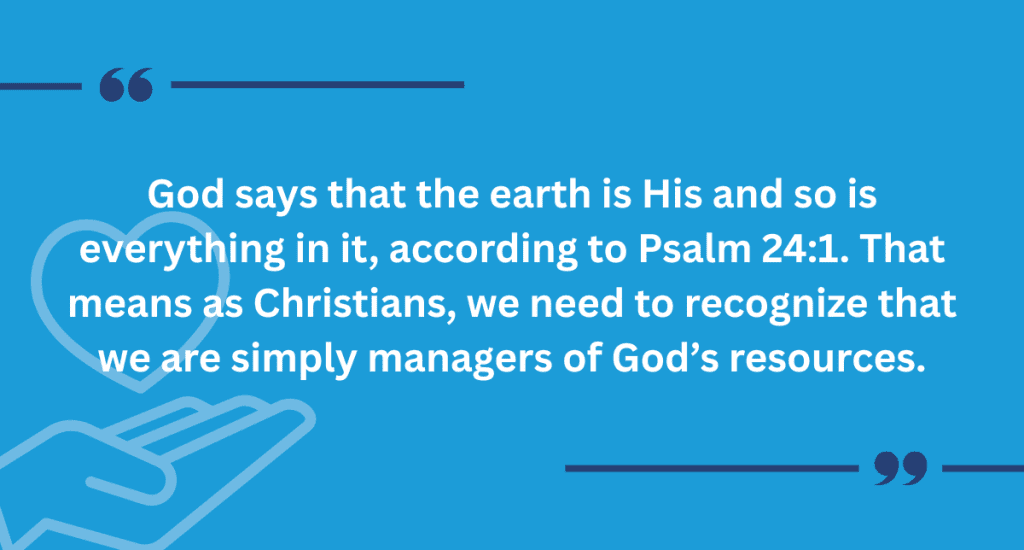
- God’s Ownership: “The earth is the Lord’s and the fullness thereof, the world and those who dwell therein.” (Psalm 24:1) This verse reminds us that everything we have ultimately belongs to God. We’re not owners, but stewards of His resources.
- Diligent Planning: “The plans of the diligent lead surely to abundance, but everyone who is hasty comes only to poverty.” (Proverbs 21:5) This verse emphasizes that effective resource management requires planning, preparation, and perseverance.
- Preparing for the Future: “Go to the ant, O sluggard; consider her ways, and be wise. Without having any chief, officer, or ruler, she prepares her bread in summer and gathers her food in harvest.” (Proverbs 6:6-8) This verse highlights the importance of working hard and investing in your future by making the most of present opportunities.
- Eternal Perspective: “Do not lay up for yourselves treasures on earth… but lay up for yourselves treasures in heaven.” (Matthew 6:19-21) Jesus’s teaching places a high value on maintaining an everlasting perspective. While it’s important to make preparations for life on Earth, our focus should ultimately be on deeper spiritual and eternal treasures.
These principles form the foundation for how we approach all aspects of financial management, including estate planning.
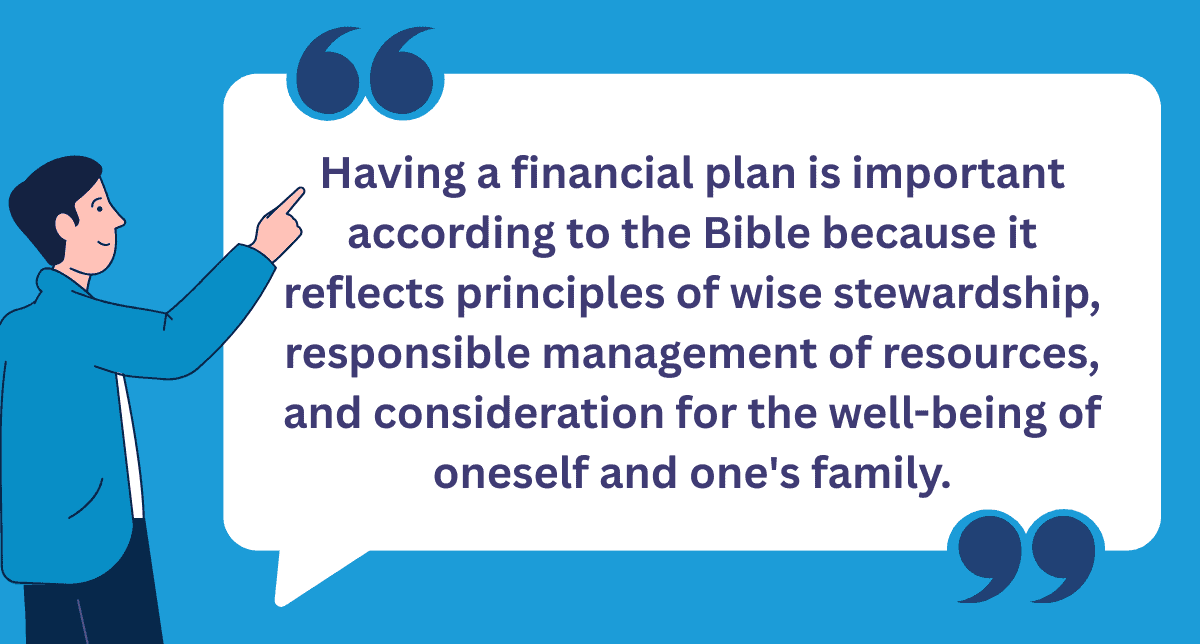
What Does God Say About Financial Planning for an Estate?
With these broader principles in mind, let’s look at how the Bible specifically addresses estate planning:
- Wisdom in Planning: “Wisdom is good with an inheritance, an advantage to those who see the sun.” (Ecclesiastes 7:11) This verse emphasizes that an inheritance without wisdom is fragile. It’s not just about passing on wealth, but also passing on the wisdom to manage it well.
- Providing for Family: “But if anyone does not provide for his relatives, and especially for members of his household, he has denied the faith and is worse than an unbeliever.” (1 Timothy 5:8) This verse underscores the importance of caring for our loved ones, even after we’re gone.
- Generational Impact: “A good man leaves an inheritance to his children’s children, but the sinner’s wealth is laid up for the righteous.” (Proverbs 13:22) This verse encourages us to think beyond our immediate family and consider the impact of our estate on future generations.
These scriptures suggest that estate planning should focus on transferring stewardship rather than just resources. It’s about passing along godly wisdom and values along with material wealth.

The Importance of Responsible Estate Planning
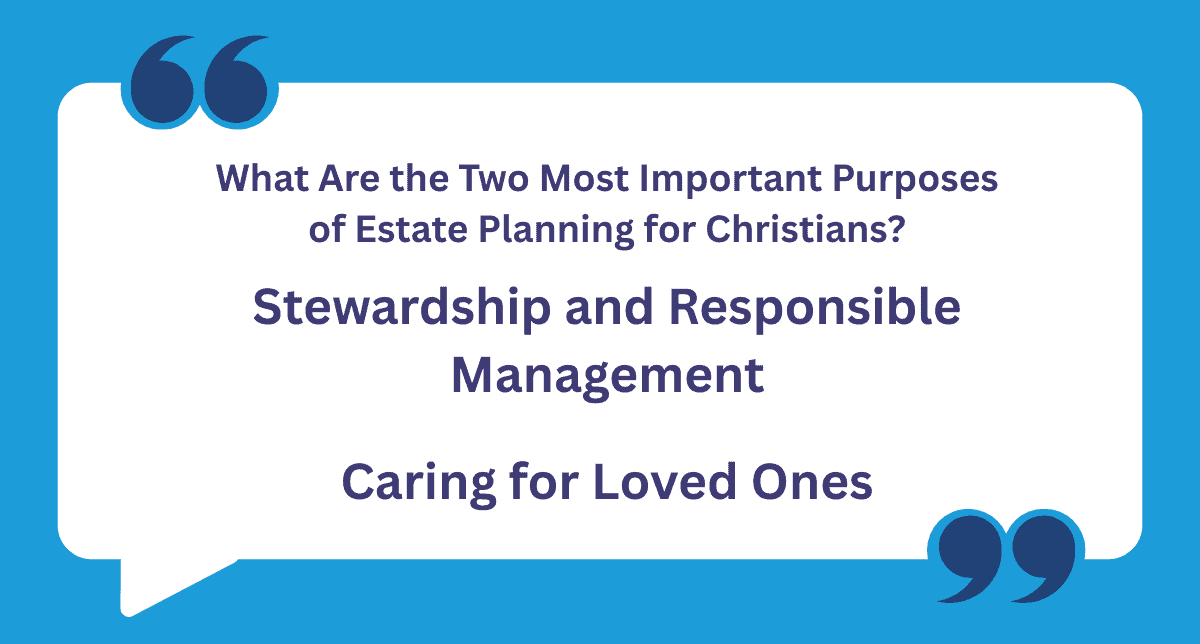
Now that we understand the biblical principles, let’s consider why estate planning is important for Christians. There are two primary purposes:
- Stewardship and Responsible Management: Estate planning allows us to manage God’s resources wisely, even after we’re gone. It’s about ensuring that the resources God has entrusted to us continue to be used in ways that honor Him and benefit others.
- Caring for Loved Ones: Estate planning ensures our loved ones are cared for financially and spiritually after our death. This includes not just immediate family, but also considering the needs of future generations and even charitable causes that align with our Christian values.
These two purposes work together. By being good stewards, we can better care for our loved ones and support causes that matter to us. And by caring for our loved ones and supporting important causes, we demonstrate good stewardship of the resources God has given us.
Learning from Biblical Examples
There are several parables in the Bible that mention foolish living, but one of the most important is the Prodigal Son (Luke 15:11-32).
In this parable, the younger son seeks his inheritance early and promptly squanders it all on “reckless living.” The son spends all of his money and finds that in his poorness, he cannot even get food meant for pigs (Luke 15:15-16). This disobedient spending leads the son to destitution—and we can find ourselves in a similar situation if we are not faithful stewards.
After realizing he has made a terrible mistake, the son returns to his father to beg for forgiveness. But the father does more than just forgive his sins, he rejoices:
“22 But the father said to his servants, ‘Bring quickly the best robe, and put it on him, and put a ring on his hand, and shoes on his feet. 23 And bring the fattened calf and kill it, and let us eat and celebrate. 24 For this my son was dead, and is alive again; he was lost, and is found.’ And they began to celebrate.”
So what if a child falls away from the plan you’ve set forth? Pray for them, look for them, and when they return, welcome them back with a celebration.
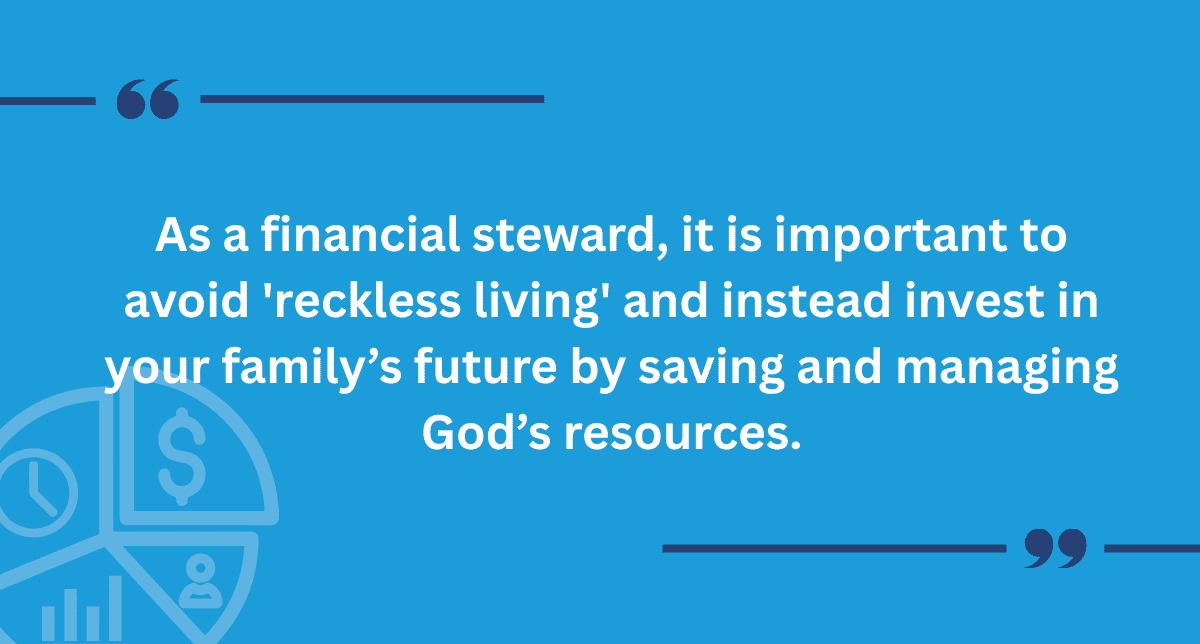
As a financial steward, it is important to avoid “reckless living” and instead invest in your family’s future by saving and managing God’s resources. Part of securing their future comes with transferring stewardship to them (and refraining from frivolous spending or ignoring God’s wishes).
Implementing Biblical Financial Stewardship in Estate Planning
With these principles and examples in mind, how can we apply biblical wisdom to our estate planning? Here are some practical steps:
- Pass Along Wisdom: Focus on transferring not just wealth, but also godly wisdom and values. Consider writing letters to your heirs explaining your values and hopes for how they’ll use their inheritance.
- Consider Generational Impact: Plan for children and grandchildren as Proverbs 13:22 suggests. This might involve setting up trusts or education funds for future generations.
- Include Charitable Giving: Consider how your estate can continue to support Kingdom work. This might involve leaving a portion of your estate to your church or favorite charities.
- Seek Godly Counsel: Work with advisors who understand biblical financial principles. They can help you create an estate plan that aligns with your faith values.
- Pray for Guidance: Seek God’s wisdom in your estate planning decisions. Remember, the goal is to be a faithful steward of the resources God has entrusted to you.
Thrive in Your Estate Planning
At Cornerstone Financial Advisory, we will help you faithfully navigate stewardship and show you how you can glorify God with your wealth and resources. We’ll assist you in the practices of good stewardship and demonstrate how your financial prosperity can bring praise to God. We provide biblically and spiritually sound investment options so you can steward the money God has given you responsibly.
If you want to learn more about the types of estate planning and how you can be a good financial steward, our Let’s Plan to Thrive program will help you deep-dive into the Bible and what God says about your finances.
The mission of Cornerstone Financial Advisory is to be an engine of blessing to our clients, families, and community. Our method of accomplishing our mission is by practicing servant leadership.
We will serve and create compelling value for our clients by leading and inspiring clients to reach their goals. With their permission, we will hold clients accountable for keeping their best intentions. We, in turn, translate our client’s needs, goals, and values into a strategy, helping align their actions with their values.